
Backflow Freeze Protection Tips
From a SCDES certified backflow tester.
Serving:
- Summerville
- Goose Creek
- Ladson
- Moncks Corner
- Hanahan
- N Charleston
How To Protect Your Backflow Prevention Assembly From Freeze Damage
Winters in the Charleston, SC Lowcountry are not typically described as harsh. We don’t usually get many nights of temperatures falling below the 32 degree threshold. But when temperatures do fall below freezing, the most common item that we see suffer freeze damage is an outdoor located backflow prevention assembly.
Backflow prevention assemblies are required if you have an irrigation system at your home or business and they are not cheap. Many businesses are required to have backflow prevention assemblies for various reasons. So how do you protect your outdoor located backflow prevention assembly from freezing when temperatures drop below 32 degrees? Let’s discuss in more detail.
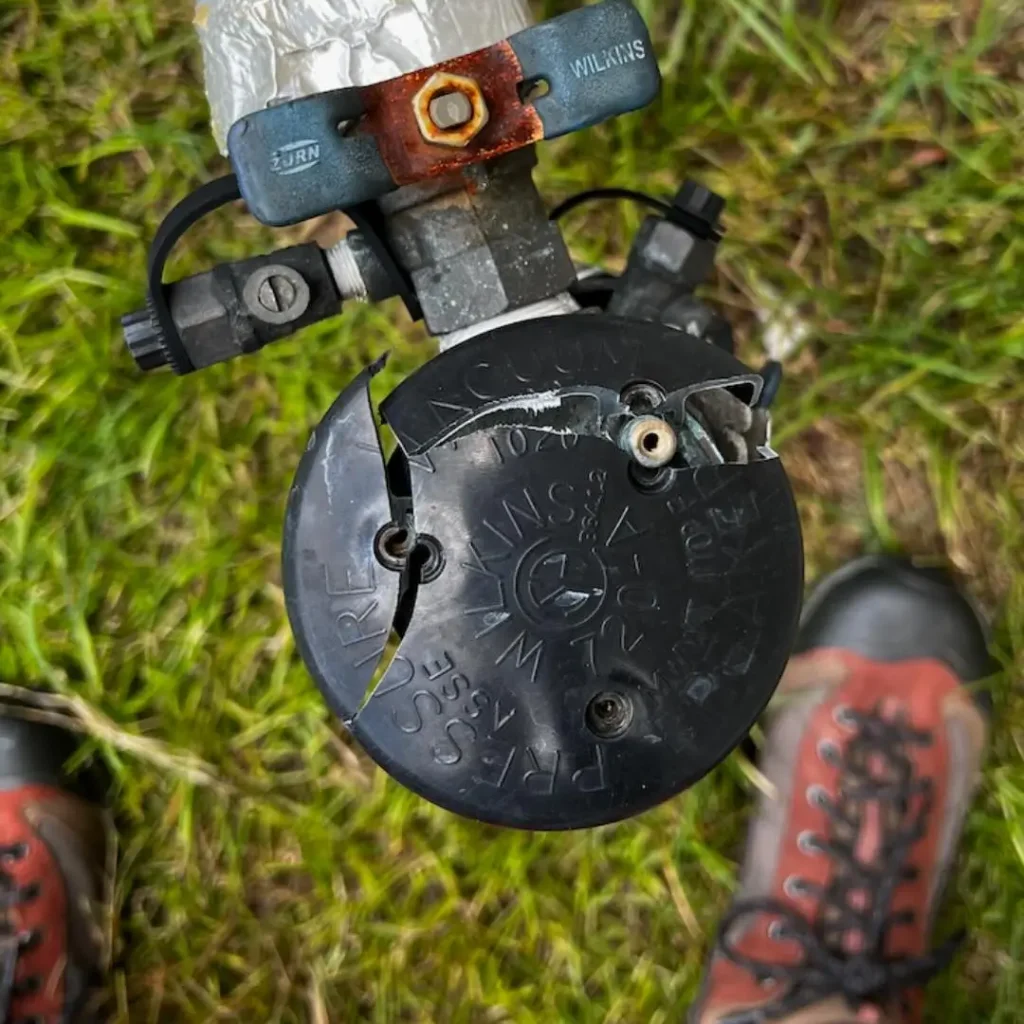
Why do backflow prevention assemblies freeze?
Most backflow prevention assemblies are made of brass and are full of water. Most residential backflow prevention assemblies are installed on irrigation lines and located outdoors, which leaves them exposed to the weather.
Every winter plumbers preach, on cold nights, to drip/stream your hot and cold water to protect your pipes from freezing. That’s a great habit to practice, but streaming hot/cold water indoors will not protect your outdoor located irrigation backflow prevention assembly. Once the water in your assembly begins to freeze, it expands as it turns to ice and can crack the copper piping and brass body of the assembly (or any other piping and material used).
Bottom line, stagnant water exposed to freezing temperatures can and will freeze if the temperatures stay cold enough for a long enough period.

Who Is Swell Guy Plumbing Co?
And why should you trust us with your backflow needs?
Swell Guy Plumbing Co is SCDES certified for backflow testing, repairs and replacements.
We bring over 25 years of Lowcountry backflow experience to your home or office.
Steven Dyson, owner, is a lifelong Lowcountry resident, and certified SCDES backflow tester.
We serve Goose Creek, Hanahan, Ladson, Moncks Corner, North Charleston, Summerville, and West Ashley, SC.
So how do you protect your backflow prevention assembly from freezing?
Please bear in mind, I’m not a scientist, so this is just basic stuff I’ve learned as a plumber over the past 25 years. So as a plumber, I only know of 2 ways to prevent potable water from freezing: heat and motion.
First, if the freezing point of water is 32 degrees and you keep the water’s temperature above 32 degrees, using a heat source, it will not freeze. Most backflow prevention assemblies are located outdoors, subject to freezing temperatures. (***A quick note – insulation bags do not produce heat).
With over 25 years of backflow experience, we’ve seen numerous methods employed to try to prevent freeze damage to backflow prevention devices. Blankets taped around assemblies, boxes filled with insulation, newspapers and magazines wrapped around the assemblies. None of these methods worked.
We’ve also seen electric heat strips used, which actually worked, but we never recommend wrapping electrical wire around copper piping to avoid a potential electrical hazard. Nor do we recommend using electric heating pads, but we’ve seen it.
We’ve also seen electric space heaters and kerosene heaters used to try to protect backflow prevention assemblies from freezing. Again, because of the electrical hazard and fire hazard, we do not recommend these methods.
Most often we see insulation bags covering backflow prevention assemblies. But after 25 years, I can tell you that insulation bags will not prevent your backflow prevention assembly from freezing, especially if we fall below freezing for multiple days. Using pipe insulation won’t prevent the piping to your assembly from freezing either. Insulation doesn’t produce heat and doesn’t cause the water flow.
Second, moving water tends not to freeze, especially in our environment where freezing temps don’t typically last for 24 hour periods for many days and weeks. So if the water is constantly moving through your backflow prevention assembly, it will not freeze.
So how do you keep water moving through a backflow prevention assembly?
Please note that turning off the inlet shut off valve to your backflow prevention assembly does not protect the inlet piping or the inlet valve from freezing.
I prefer something easier than having to mess with the test ports every time it freezes, such as a freeze protection valve.
My Backflow Freeze Protection Recommendation?
In my 25 years of backflow experience, I’ve learned that the easiest way to prevent freeze damage is to install a freeze protection valve. I personally have one and I’ve never had any freeze damage to my backflow prevention assembly.
I don’t use my irrigation system in the winter, so I turn off my number 2 shut off valve, drain the irrigation system, and my FPV does the rest.
Freeze protection valves use the same method as dripping your faucet. When the water temperature gets close to freezing the valve will start to drip. The colder the temperature gets, the more water the valve will discharge. The freeze protection valve protects your backflow prevention assembly by ensuring the water inside is constantly moving, thus preventing the water inside from freezing, turning to ice and damaging your assembly.
Given how expensive backflow prevention assemblies can be, I highly recommend using a FPV to protect it.
If you need help protecting your backflow prevention assembly from freeze damage, we’re ready to help.
Call Or Schedule Online Today
Swell Guy Plumbing will put over 25 years of backflow experience to work for you.

Over 25 Years Of Plumbing Experience In The Lowcountry Area
- Goose Creek
- Hanahan
- Ladson
- Moncks Corner
- N Charleston
- Summerville
© 2026 Swell Guy Plumbing Co.. All Rights Reserved. SC# M115194